Poopidex
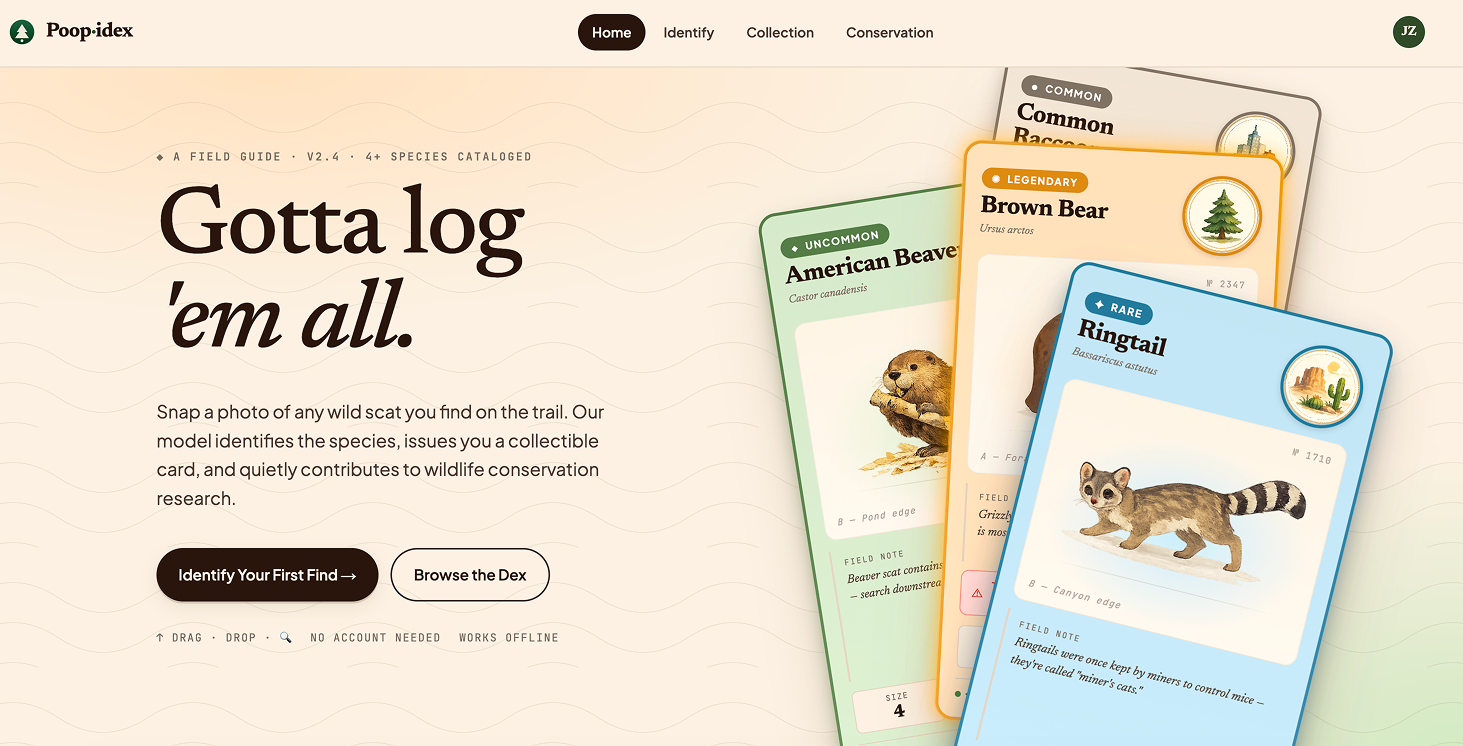
A vision AI app that turns a scat photo into a species ID and a collectible card, powered by a fine-tuned vision model and Claude Vision.
Why We Built This
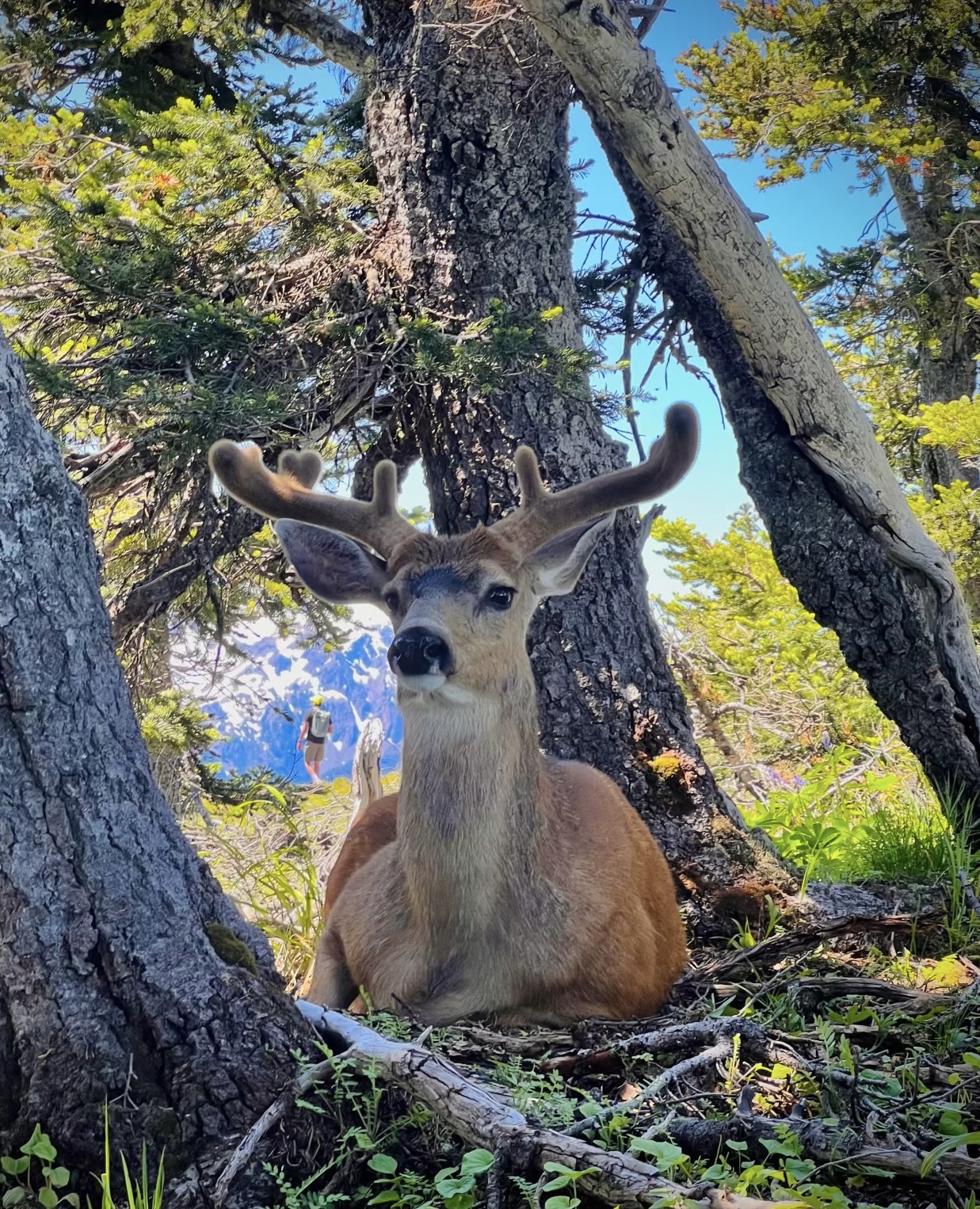
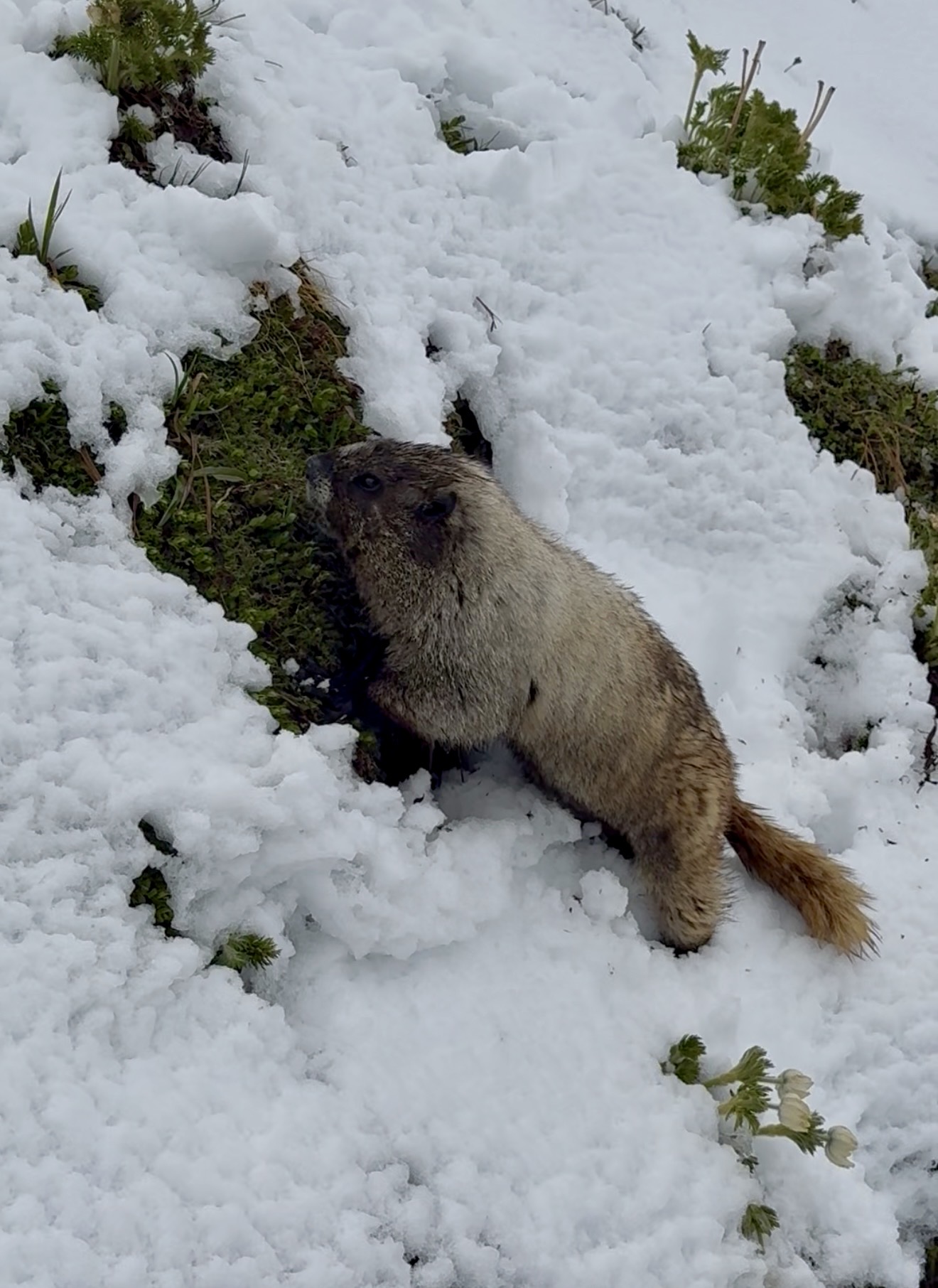
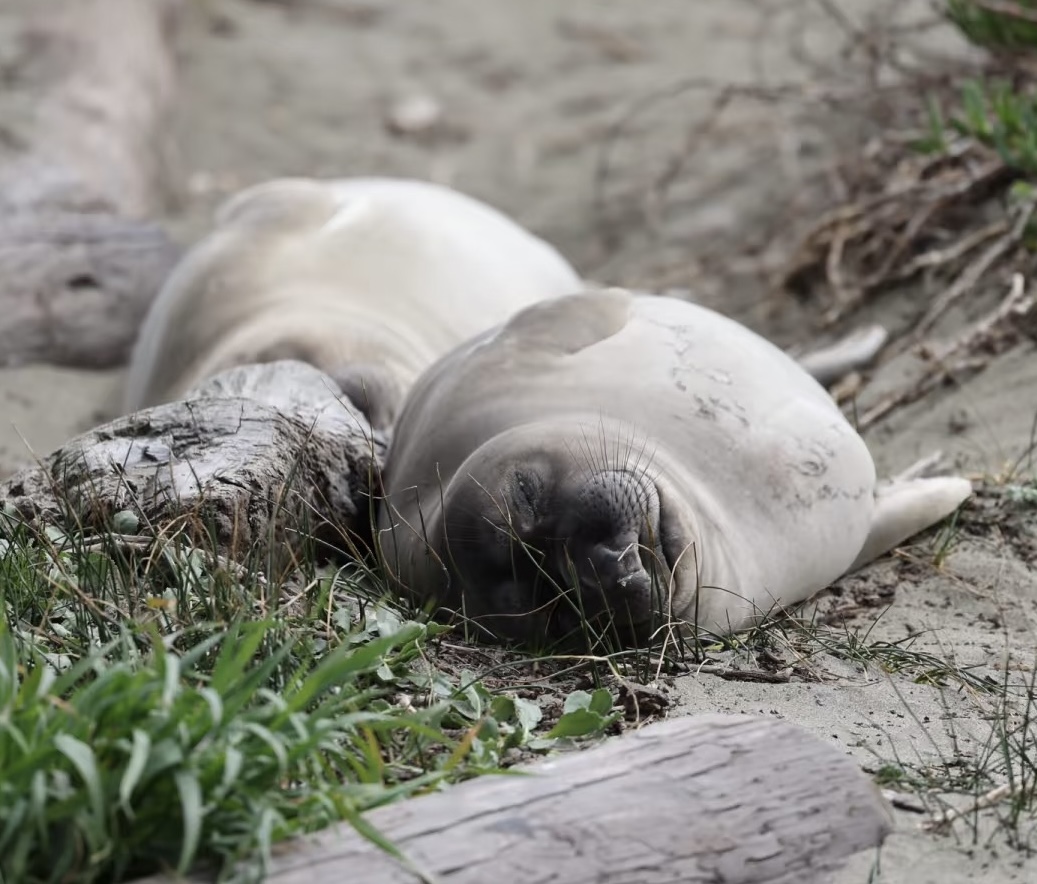
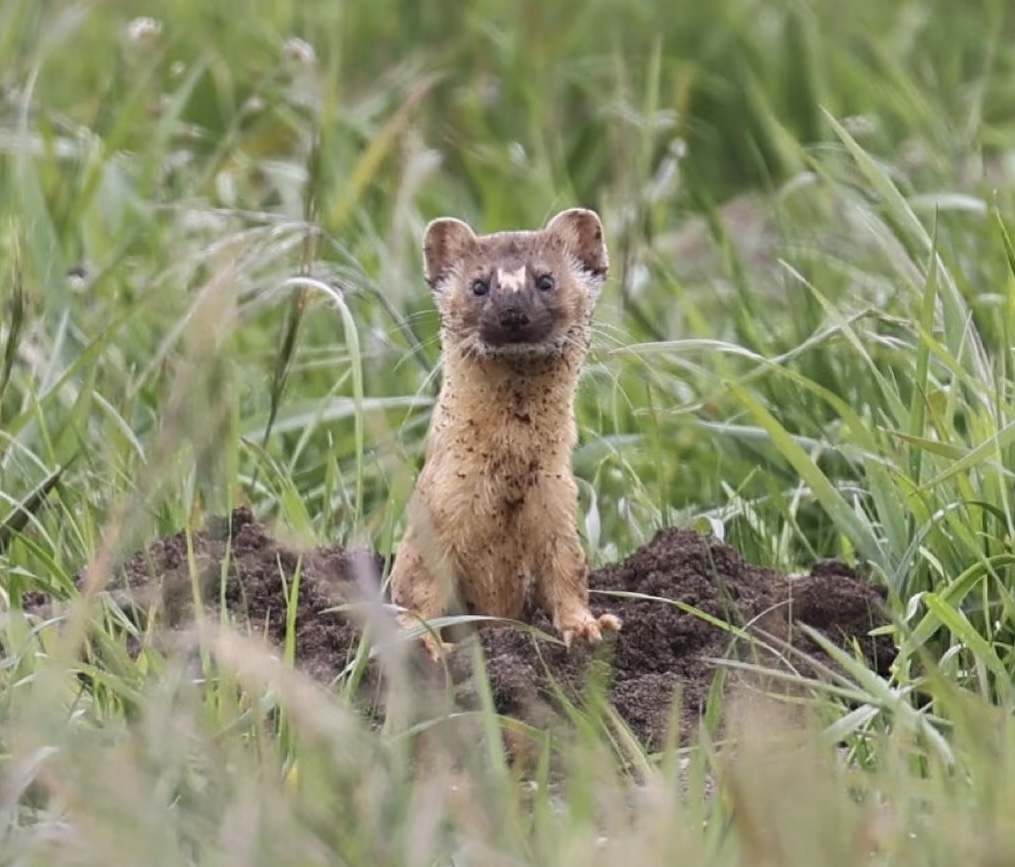
I'm always curious about the wildlife I run into on hikes. Sometimes it's something I can spot right away, sometimes it's just tracks or scat left behind, and I'm left wondering what animal was actually there. That curiosity is really where Poopidex started.
Poopidex turns that into something you can use. Take a photo, get a real ID, start building a collection. There's a bigger point to it too. Enough sightings tracked over time start to look like real data, the kind that's normally hard to collect at any real scale, and could genuinely help with wildlife tracking.
Technical Stack
Frontend
- Next.js 16
- React 19
- Tailwind v4
Backend
- Next.js API route
- Real-time streaming
AI Models
- Claude Opus 4.7 — decider
- CLIP ViT-B/32 — fine-tuned
- Chain-of-thought reasoning
Training Data
- AnimalClue (Shinoda et al., ICCV 2025)
- Feces-specific subset
Filtering
- Size, habitat, contents
- Hard biological rules
Infrastructure
- Vercel — frontend hosting
- Hugging Face Spaces — CLIP inference
- Local storage — no signup
What's Next
• Expand past the initial 20 cataloged species
• Add community-verified sightings to strengthen the model
• Build the conservation map into a full citizen-science tool
• Explore broader indirect evidence types beyond feces — tracks, bones, feathers — since AnimalClue already covers them